Essential Whole Spices You Need to Prepare Authentic Sambar Powder
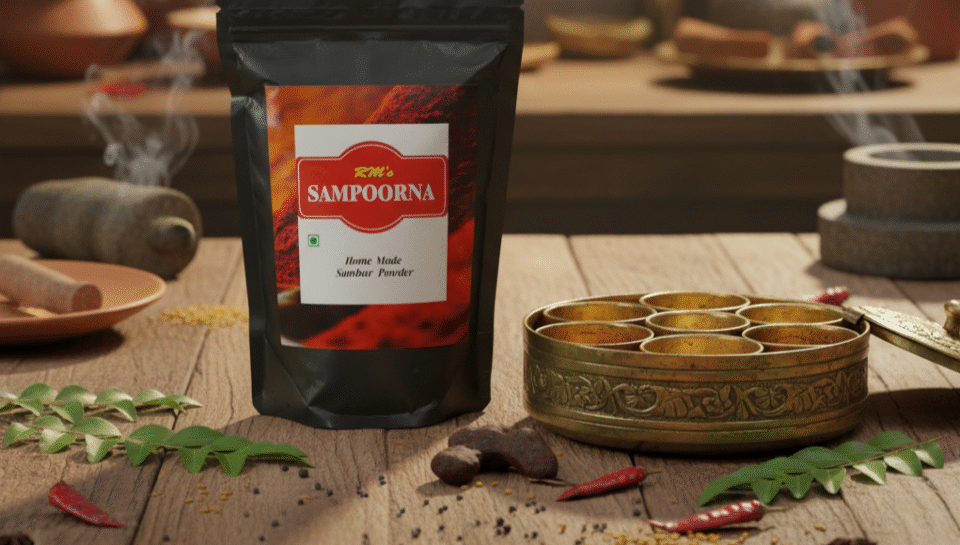
Homemade sambar powder is what makes South Indian food truly unforgettable. This aromatic, flavorful blend of roasted spices and lentils gives sambar its signature taste. While packaged powders are easy to find, there is something magical about preparing it at home—your kitchen fills with the fragrance of roasted chilies, coriander, and curry leaves, making the experience memorable.
What is Sambar Powder?
Sambar powder is a traditional South Indian spice blend used to prepare sambar, a lentil-based vegetable stew served with rice, idli, or dosa. The origins of sambar are rooted in Tamil Nadu but it has spread across South India with regional variations. Unlike store-bought versions, homemade sambar powder carries freshness, authenticity, and the personal touch of the cook.
Ingredients Used in Homemade Sambar Powder
Lentils like toor dal, urad dal, and chana dal form the base. They add body, mild nuttiness, and protein to the mix.
These bring in vibrant color and a controlled level of heat. Depending on preference, you can use milder varieties for aroma or spicier ones for heat.
Coriander is the soul of sambar powder. Its citrusy, earthy aroma balances the pungency of chilies.
Cumin adds warmth and depth, while fenugreek seeds enhance digestion and lend a subtle bitterness that balances the mix.
Fresh curry leaves roasted to crispness add an irresistible aroma, while asafoetida (hing) enhances digestion and adds an earthy, savory note.
Step-by-Step Preparation of Sambar Powder
Regional Variations of Sambar Powder
| Style | Characteristics |
|---|---|
| Tamil Nadu Style | Uses more red chilies and a hint of black pepper for bold flavors. |
| Karnataka Style | Sweeter in taste, often including a touch of jaggery and more coriander seeds. |
| Andhra Style | Spicy and fiery, this version uses more dried red chilies. |
| Kerala Style | Milder, often enriched with coconut for added richness. |
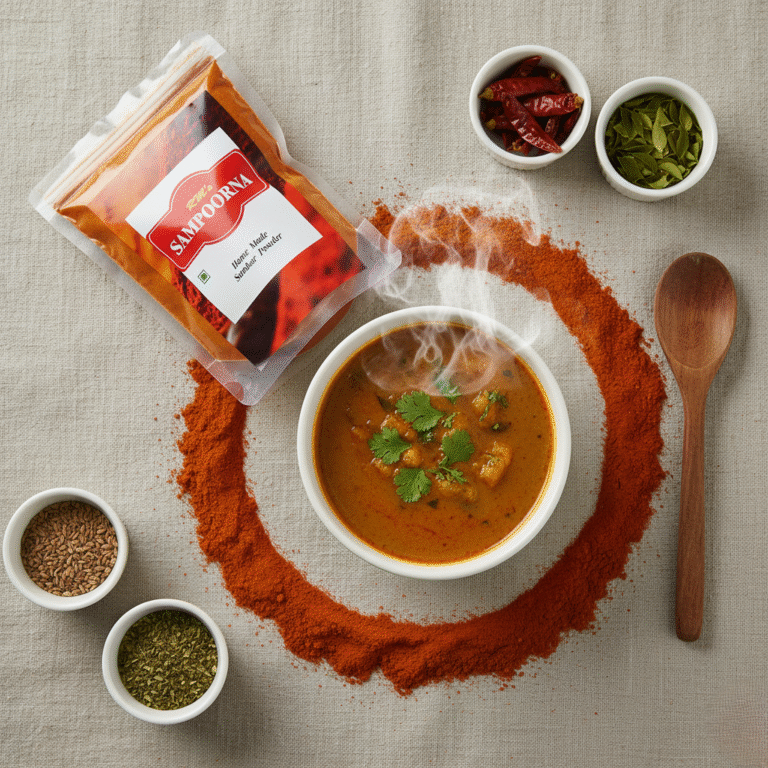
Why Homemade is Better Than Packaged
- Fresher aroma and natural taste.
- Freedom to adjust spice levels.
- Free from preservatives, artificial flavors, and excess salt.
Nutritional Benefits of Homemade Sambar Powder
- Protein-rich lentils provide energy and satiety.
- Spices like coriander and cumin are rich in antioxidants.
- Fenugreek and asafoetida promote gut health and digestion.
Tips for Perfect Homemade Sambar Powder
- Always roast on low flame.
- Store in airtight containers away from moisture.
- Add fresh curry leaves for longer-lasting aroma.
Popular Dishes with Sambar Powder
- Classic sambar with hot rice.
- Idli and dosa served with sambar.
- Vegetable curries and stews infused with the spice mix.
Homemade vs. Commercial Brands – A Comparison
Homemade sambar powder versions win in freshness, authenticity, and nutritional benefits, while commercial brands win in convenience and shelf life. But for flavor and cultural value, homemade stands unmatched.
Common Mistakes to Avoid
Burning spices while roasting, using wet curry leaves, or grinding hot ingredients can spoil sambar powder and shorten its shelf life.
Modern Twists with Sambar Powder
Today, chefs experiment by using sambar powder in pasta, roasted vegetables, or even popcorn. Fusion snacks and quick curries are becoming popular with younger generations.
The Cultural Connection of Sambar in South India
Sambar is not just food; it is tradition. Served at weddings, temples, and festivals, it symbolizes togetherness. Cultural food days often highlight the significance of traditional dishes like sambar, linking education with heritage. The rich flavor of this classic dish comes alive with homemade sambar powder, which adds authentic aroma and taste to every serving.
Step-by-Step Recipe for Beginners
Roast ½ cup coriander seeds, ¼ cup toor dal, 2 tbsp chana dal, and 2 tbsp urad dal.
Add 15 dried red chilies, 1 tsp fenugreek seeds, 1 tsp cumin, and roast separately.
Fry a handful of curry leaves until crisp.
Cool all ingredients and grind to a fine powder with ½ tsp asafoetida.
Store in an airtight jar and use as required.
Homemade sambar powder is more than just a spice blend—it is the heart of South Indian kitchens. It carries stories of tradition, health, and love passed down through generations. Preparing it at home connects us to our roots and ensures every meal is wholesome and flavorful. So, the next time you crave authentic South Indian taste, remember—your own kitchen holds the secret.
FAQ's
1. How long can I store homemade sambar powder?
If stored in an airtight container in a cool, dry place, it lasts 3–4 months without losing flavor.
2. Can I make sambar powder without curry leaves?
Yes, but the aroma will be less authentic. Curry leaves are essential for traditional flavor.
3. What is the best chili to use in sambar powder?
Byadagi chilies for color and Kashmiri chilies for mild heat are commonly used in Karnataka.
4. Can sambar powder be used in other recipes?
Absolutely! You can add it to rasam, vegetable curries, fried snacks, and even marinades.
5. Is homemade sambar powder healthier than store-bought?
Yes, because it is free from preservatives, artificial colors, and excess salt.